
January Nature Happenings
- Project FeederWatch continues, www.birds.cornell.edu/pfw
- Watch for mixed flocks of birds to feed on winter berries, poison ivy and cedar trees.
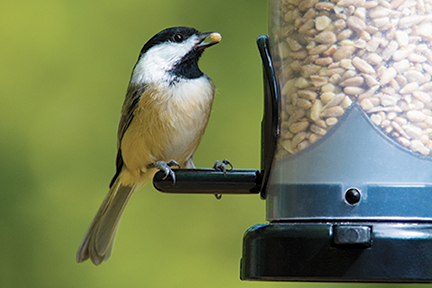
- Now through late March is a difficult time for birds; providing food and an open source of water is important.
- During the first or second week of January, the first returning Purple Martins will be seen along the coast.
- Squirrel mating season.
- Woodpeckers are easy to spot on leafless trees.
- Waterfowl are present on the coast or on deep-water lakes.
- Coastal states host many wintering hummingbirds that need a reliable source of nectar.
- During late January or early February, Great Horned Owls will be sitting on their eggs.
- Bald Eagles continue nesting behavior.
- Black-crowned Night-Heron nesting begins.
- Wood Stork colony formation begins.
- Barred Owl: (January - February) nesting peak (incubation 28-33 days).
- Aldo Leopold's (Father of Wildlife Conservation) birthday Jan. 11
- Quadrantid Meteor Shower early in the month. See up to 60 falling meteors per hour!
From Our Friends at UF IFAS
Birds
Male cardinals begin territorial singing later in the month.
Roseate spoonbill nesting activity is in full swing in Florida Bay.
Other nesting activity can be seen by ospreys, sandhill cranes, hawks, and owls.
Look for red-tailed hawks perched in trees along highways.
Huge clouds of tree swallows should be visible around sunset roosting over large marsh areas.
Don't forget, now is a great time to watch our over-wintering populations of ducks and geese.
Mammals
Gray foxes, bobcats, and raccoons begin breeding this month.
Deer reach the peak of the rutting season in north Florida.
Black bears in North Florida are inactive or in dens
Fish
Black crappie start feeding heavily in central Florida
Striped bass and sunshine bass move into open water to feed on shad